
Alfred Regnery
Click on images to open them larger in lightbox
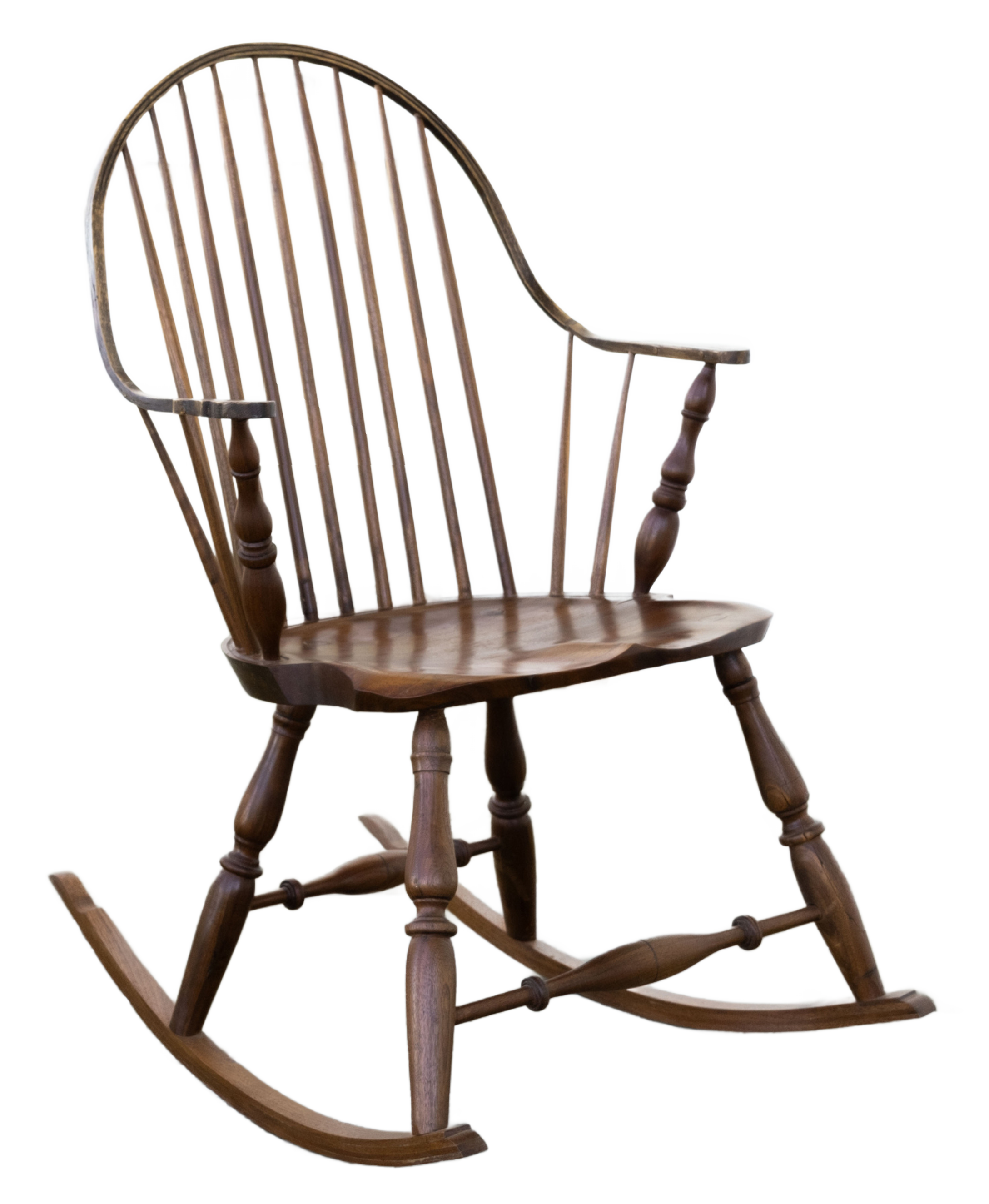
Windsor Rocker
Alfred Regnery
Continuous arm rocking chair made from solid walnut. The “continuous arm” name comes from the one piece arm, steam bent and fitted into the thirteen spindles. This is a copy of a chair made in New York about 1780 and designed to appear to defy gravity.
Inquire
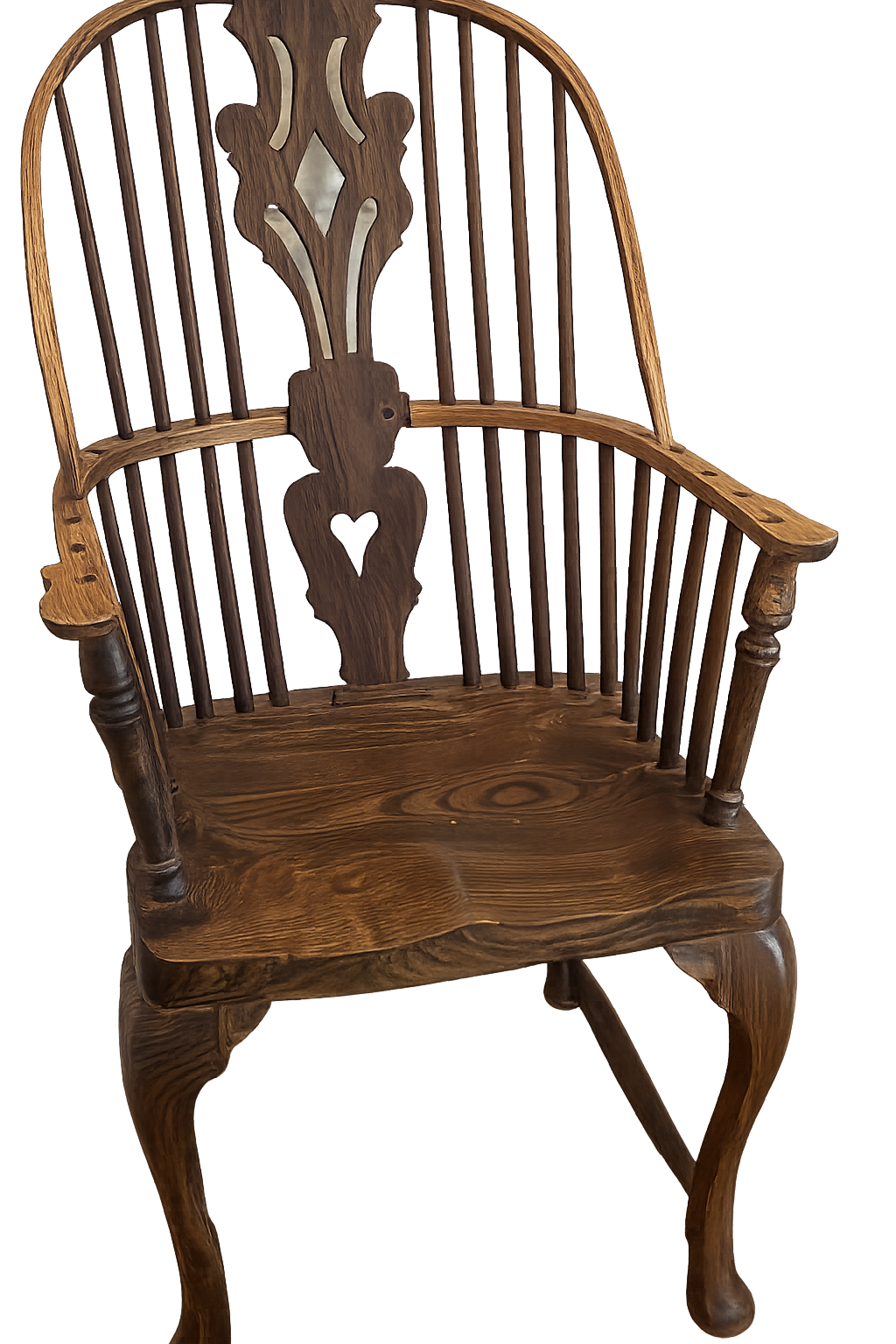
Windsor Armchair
Alfred Regnery
Copy of early 19th Century Windsor armchair with cabriole legs and H-style stretcher, and shaped and fretted back-splat. The chair is largely made of domestic elm, except for the bows, made of white oak. Finished in hard-wax oil.
Inquire
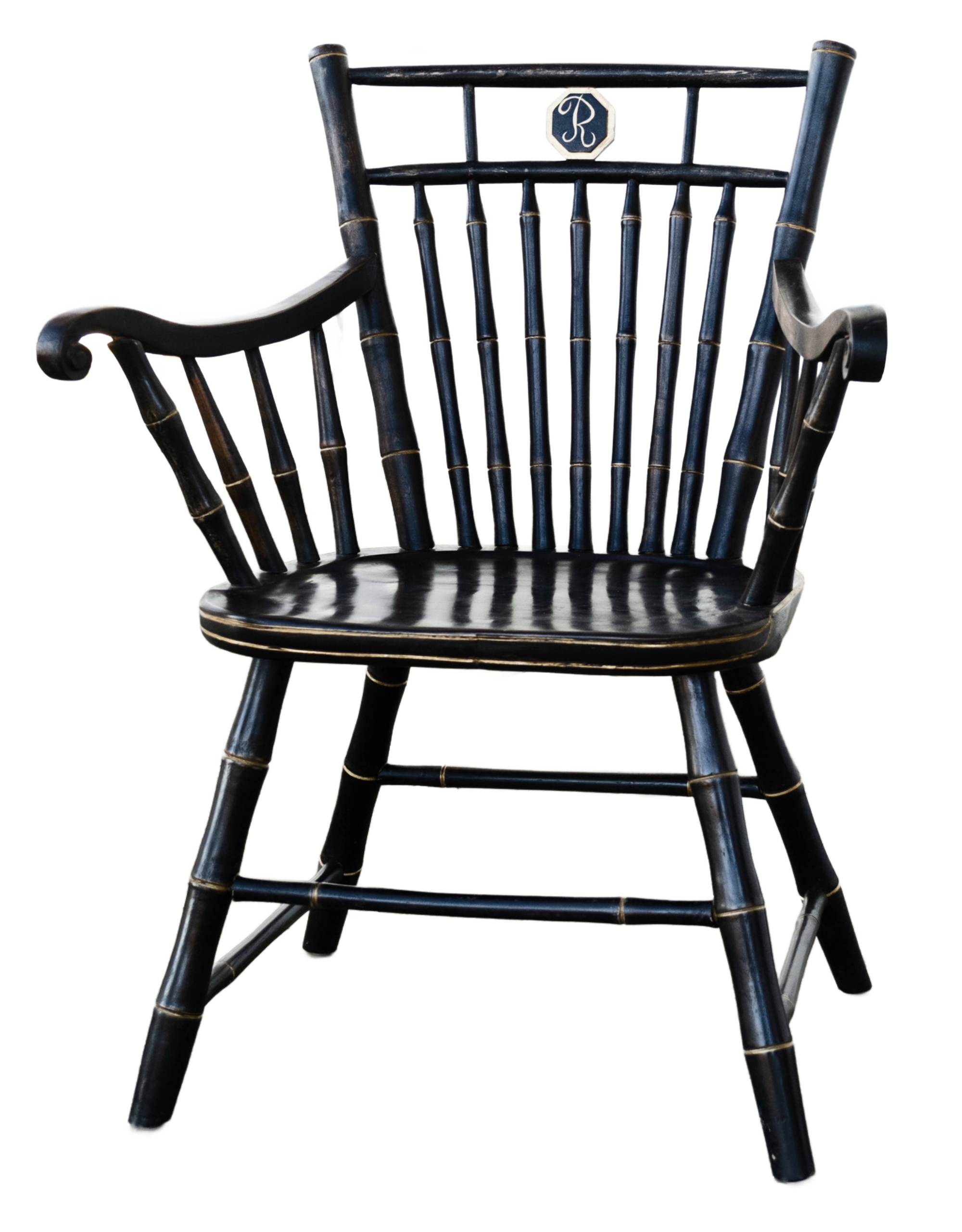
Double Bowed Windsor Birdcage Armchair
Alfred Regnery
Made of cherry, maple and oak and finished ih black milk paint with gold ornamentation. Thomas Jefferson had chairs like this made in about 1800 for the entrance hall at Monticello; several are still there.
Inquire
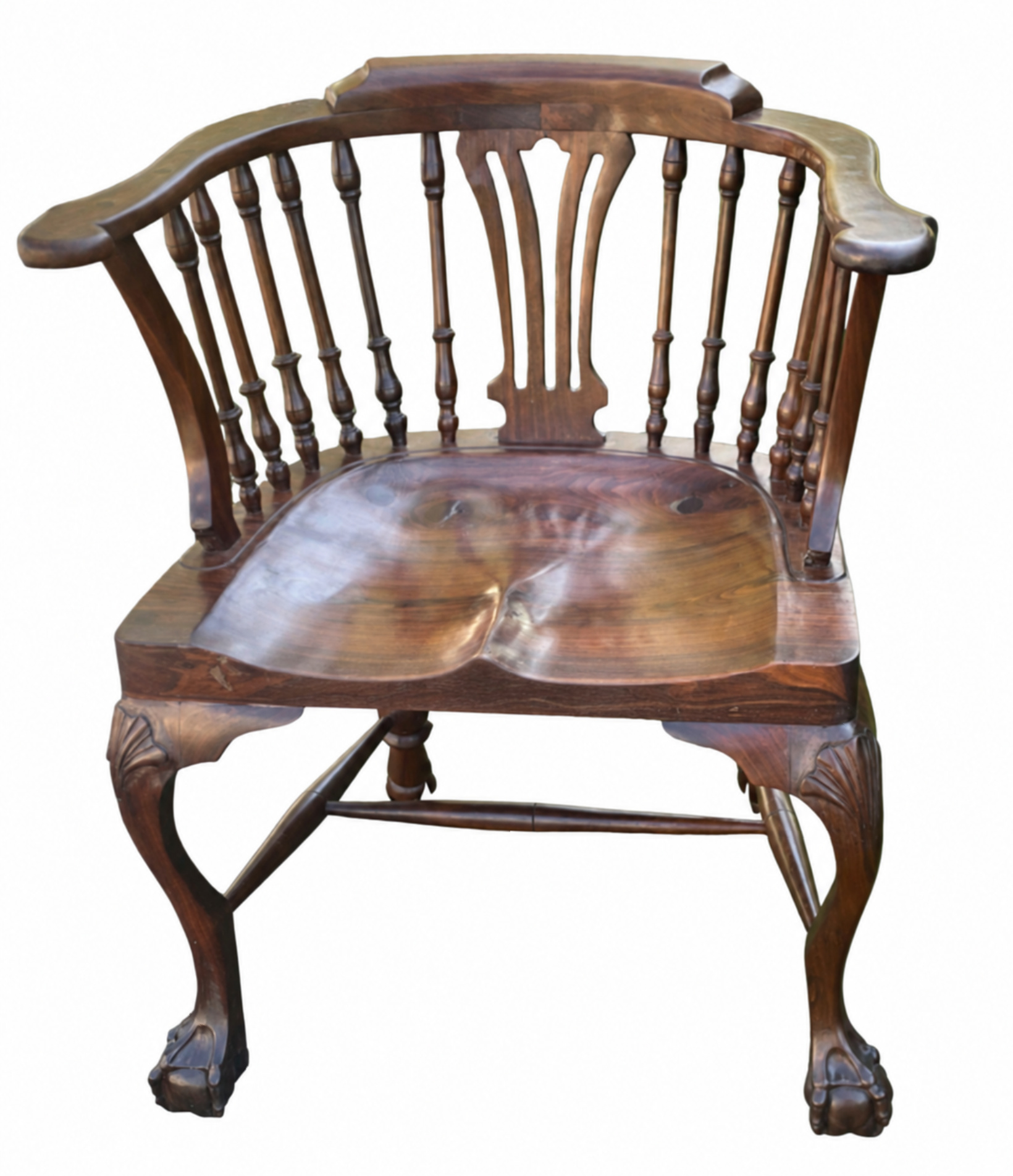
George III Low Back Windsor Chair
Alfred Regnery
With cabriole legs and ball and claw feet. The original was made in England by an unknown maker about 1770 (and is for sale in a high-end antique shop in Tennessee for $19,500), mine is made from solid walnut and finished with boiled linseed oil, shellac and beeswax.
Inquire
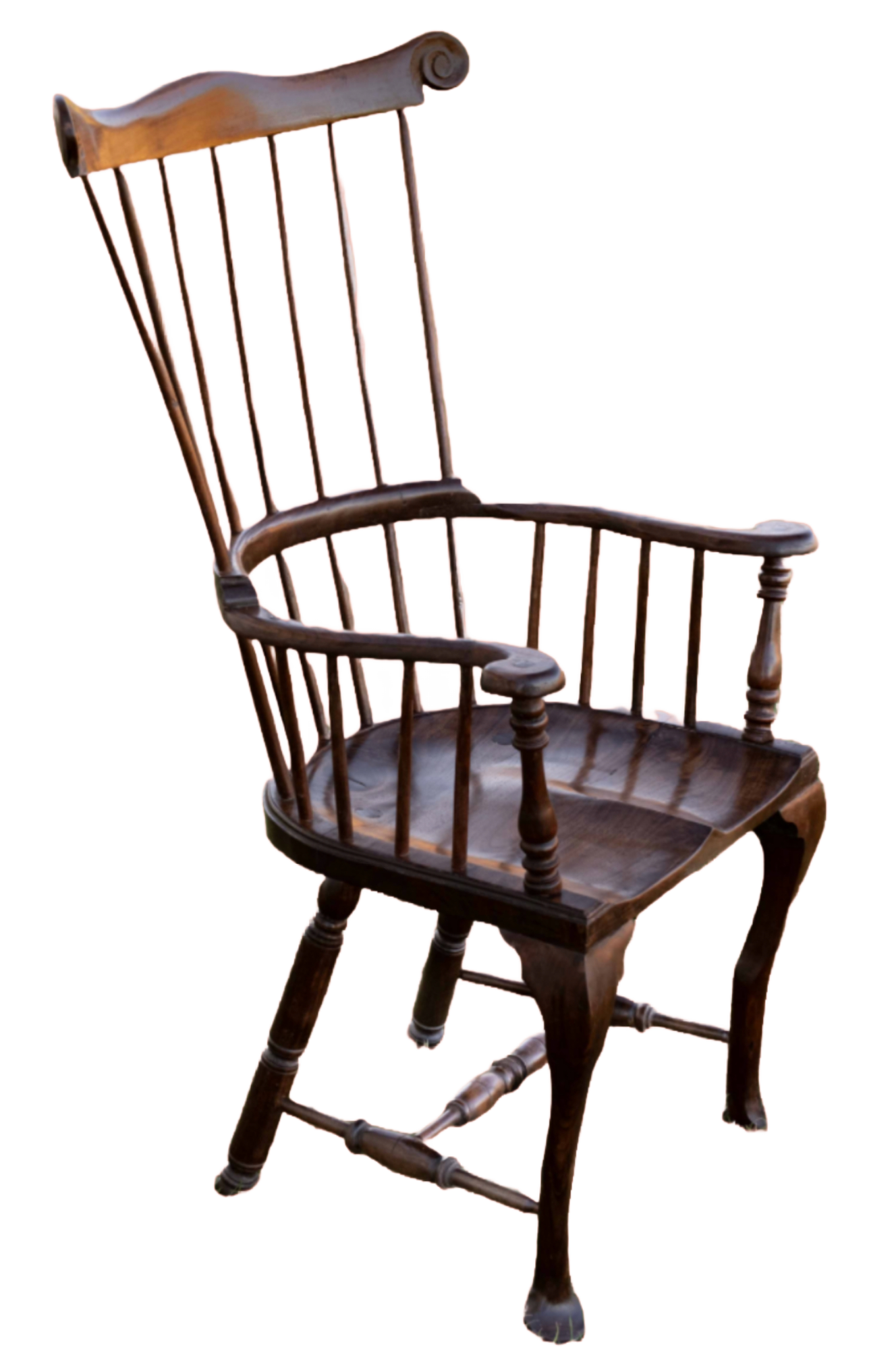
Philadelphia High Back Windsor with Cabriole Legs
Alfred Regnery
Unusual in Windsors and more typically English than American. This is a copy of a chair made about 1740 in Philadelphia, now displayed at the Art Institute of Chicago.
Inquire
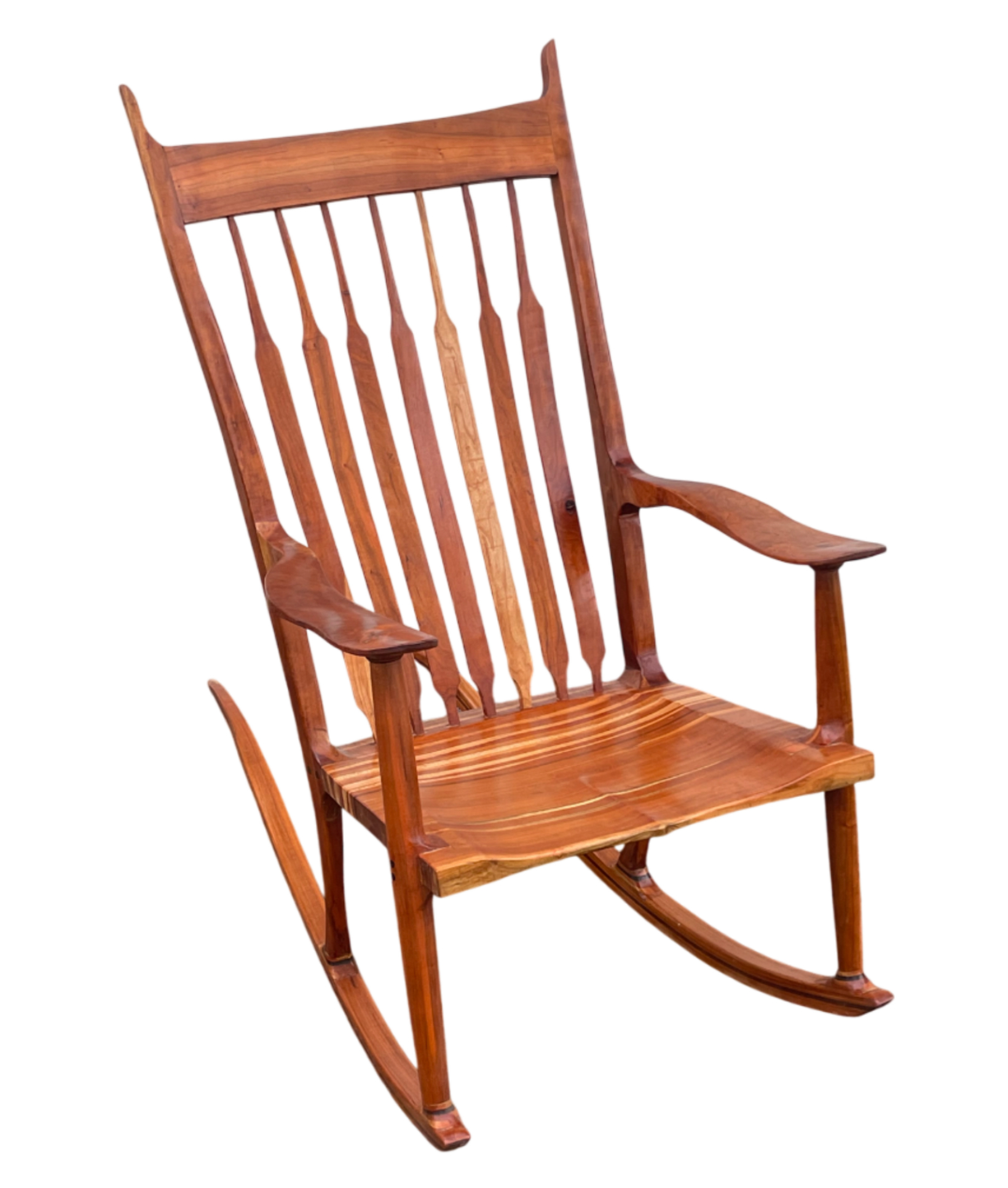
Ambrosia Maple Rockier with Walnut Back Slats
Alfred Regnery
Inspired by mid twentieth century Lebanese immigrant craftsman Sam Maloof who set up shop in California in the 1950s; copying his chairs is now la pièce de résistance among amateur woodworkers.
Inquire
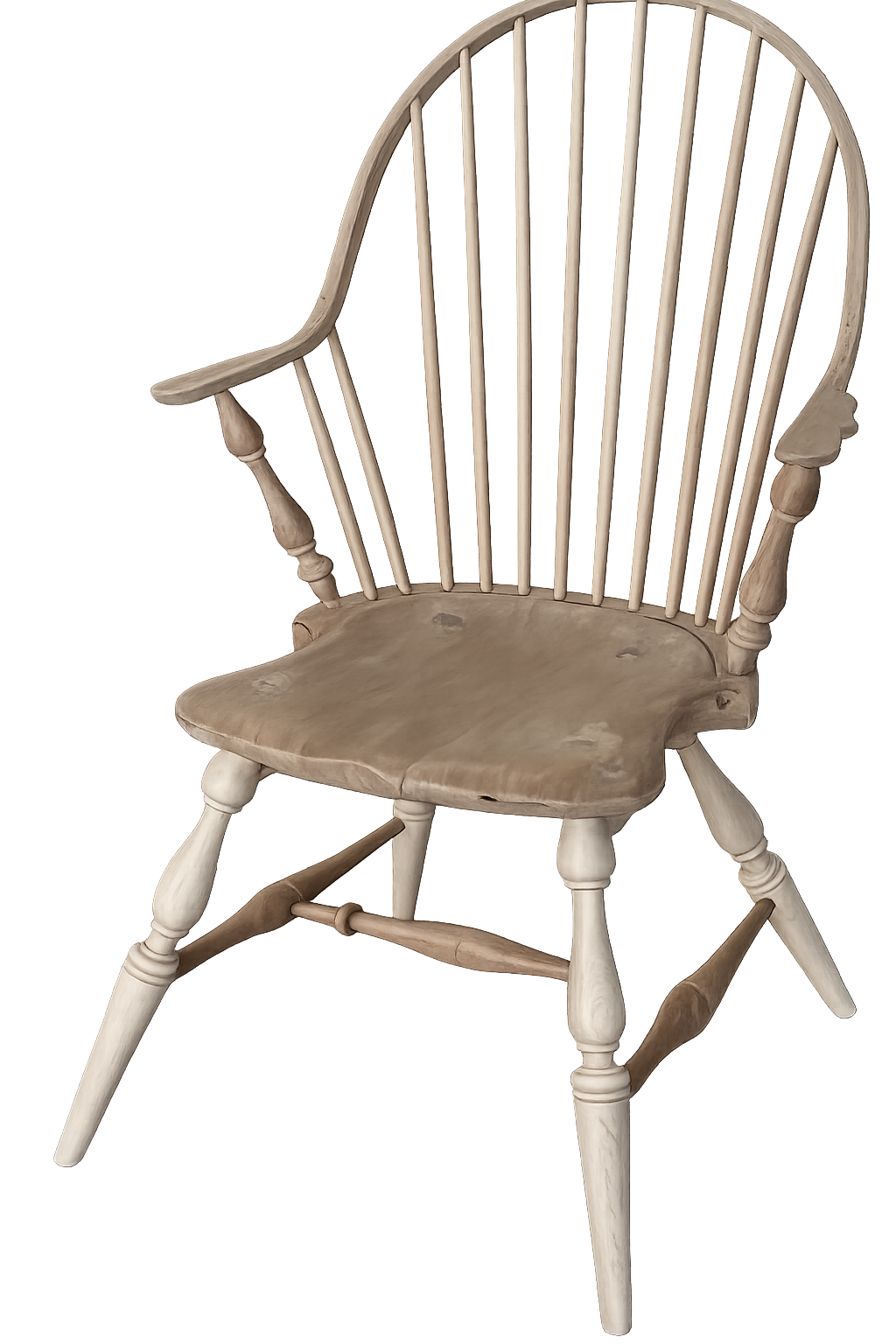
Continuous Arm Windsor Chair
Alfred Regnery
Patterned after a chair made in Providence, Rhode Island in 1780, made of cherry, hard maple, hickory and oak.
Inquire
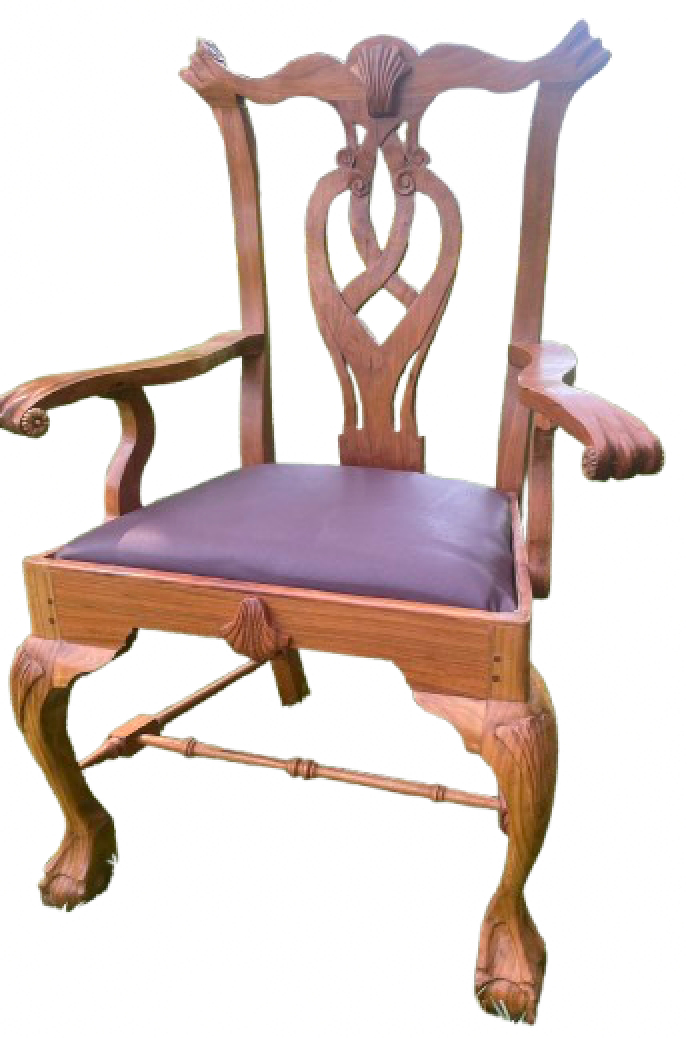
Chippendale Cherry Armchair
Alfred Regnery
With ball and claw feet and carved acanthus leaves, copy of a 1750s chair, of which many were made in both America and England. Thomas Chippendale was a woodworker in London, who designed furniture in the mid-Georgian, English Rococo, and Neoclassical styles and published a book of his designs in 1760 which is still in print.
Inquire
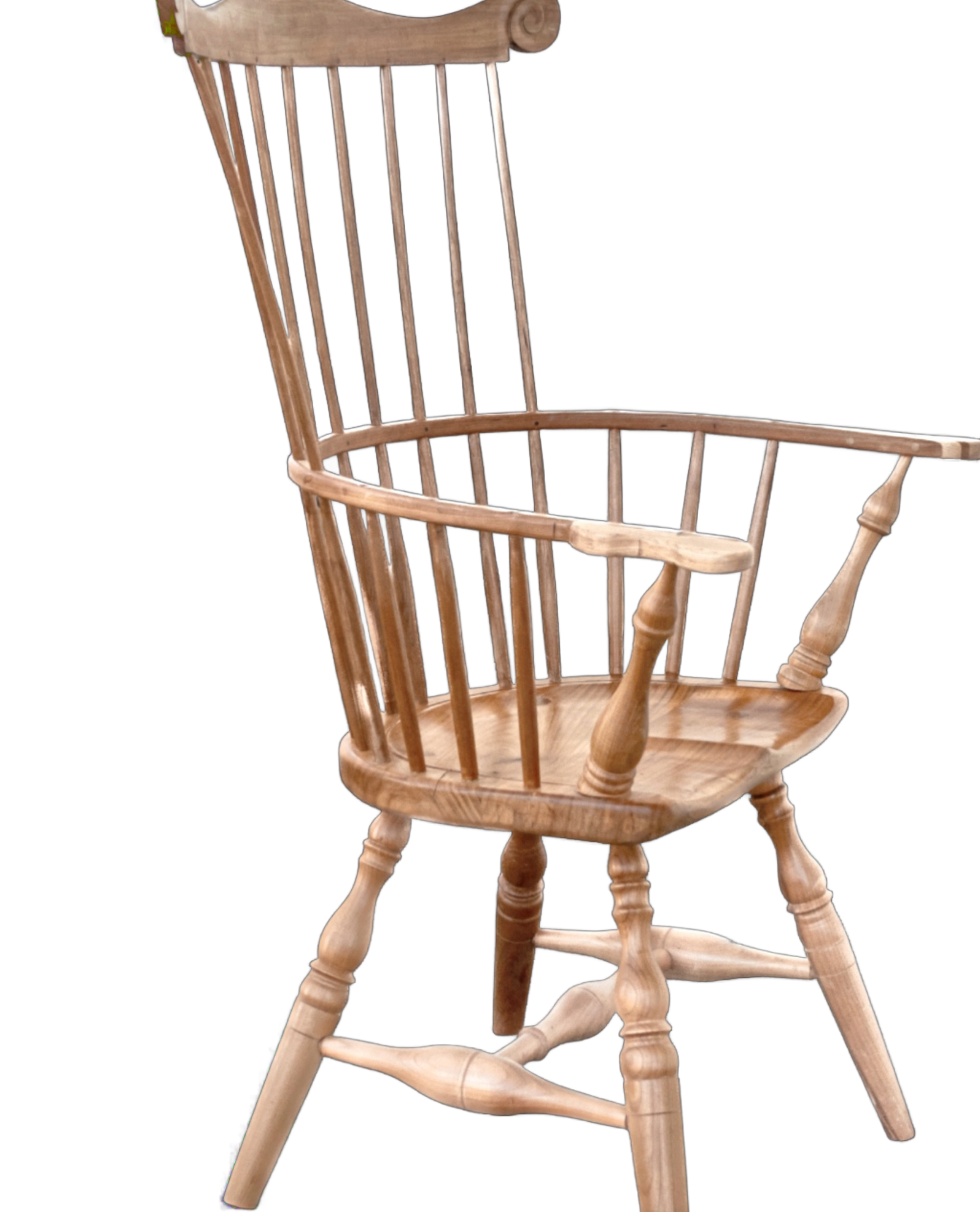
High Back Cherry Comb Back Windsor
Alfred Regnery
With carved “ears” on the crest. These were made in Philadelphia and New York by the thousands during the last 40 years of the 18th century and were one of the mainstays at Constitution Hall during the Constitutional Convention in 1787, most of which were used by the British for firewood during the War of 1812.
Inquire
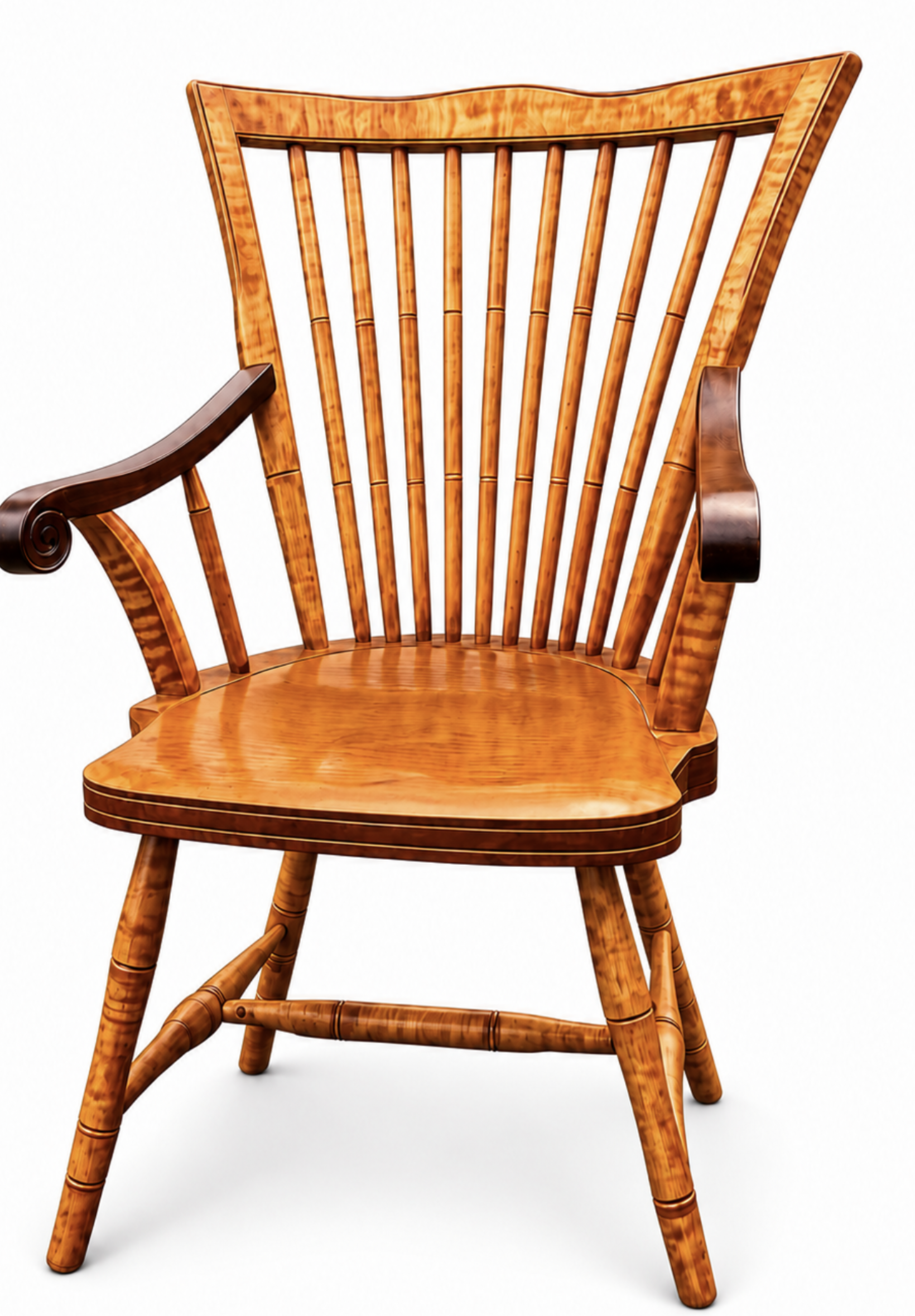
Square Back Windsor Chair with Walnut Arms
Alfred Regnery
Copy of a chair made by Samuel Moon in Bucks County PA about 1795. Several of these Moon chairs were sold by Thomas Jefferson’s estate after he died to pay off debts. Made of Pennsylvania tiger maple and walnut with hand-rubbed finish of shellac and wax.
Inquire
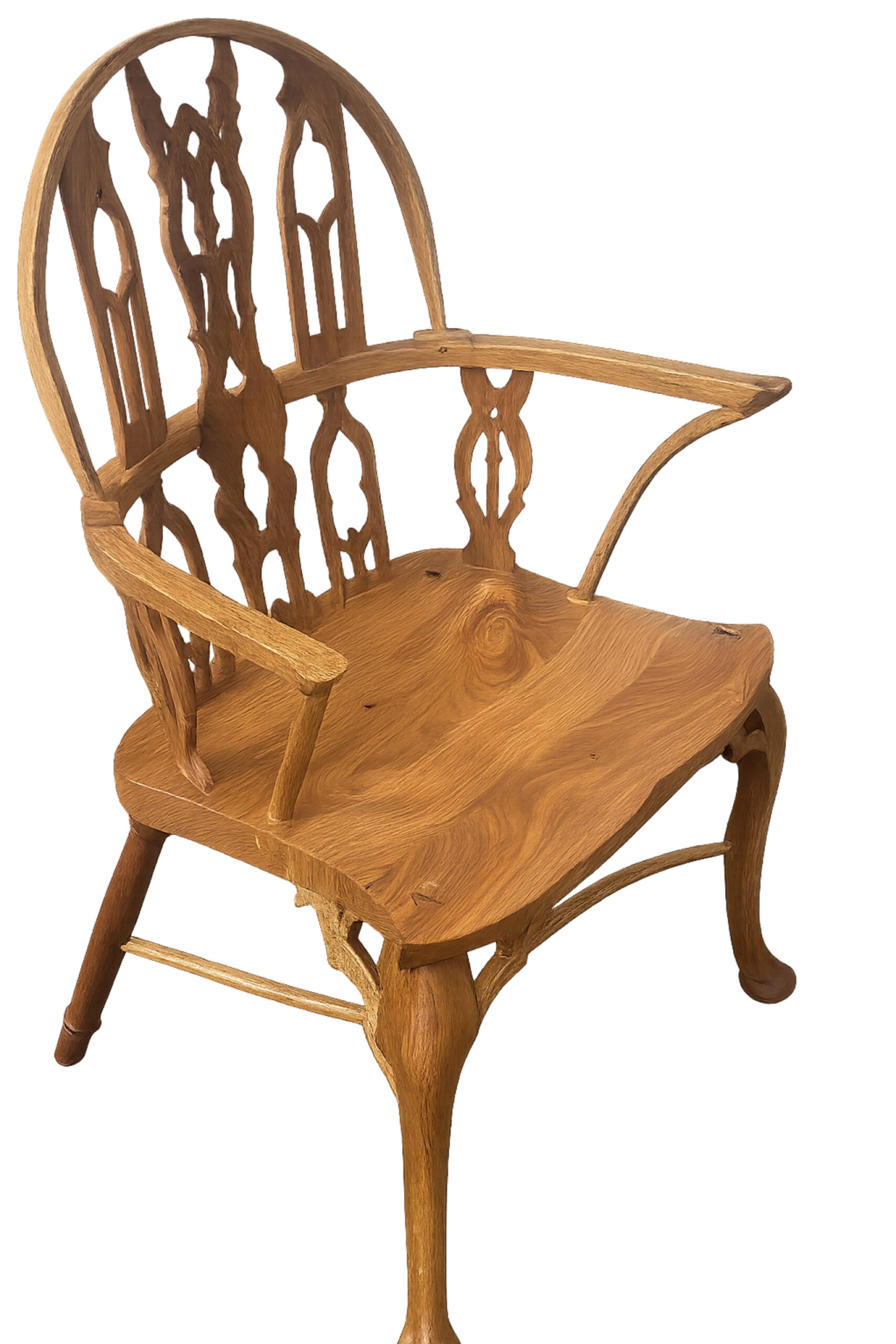
George III “Gothic” Windsor Chair
Alfred Regnery
Copy of one made in the Thames Valley about 1740. Yew was the favored wood for these chairs, which is now unavailable so mine is made of elm, maple, oak and ash and finished with boiled linseed oil. Also known as a Strawberry Hill chair, it was made for the neo-Gothic mansion by the same name built In Twickenham, London for Horace Walpole in the 1730s who ordered furniture to match the style of the house. A pair of originals, owned by the Rockefeller family, was sold at Christies in 2018 for $336,500. Gothics are considered the most exquisite and finest design of all Windsor chairs, and the rarest of all the Windsor models.
Inquire
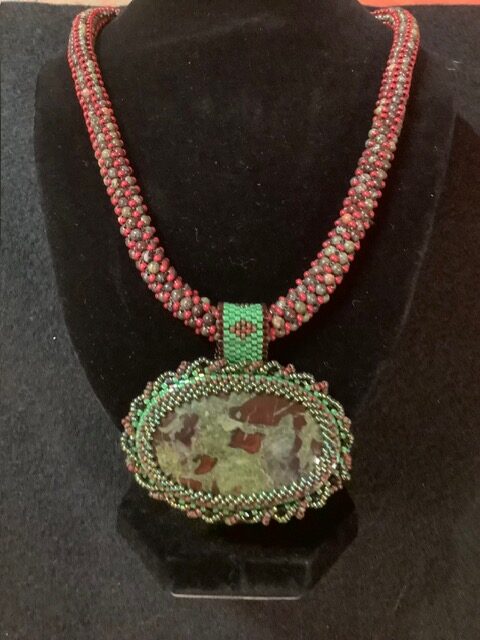
The Dragon Blood Estate Necklace
Audrey Regnery
The signature piece of the Bloodstone Collection, a one of a kind handwoven statement necklace, featuring a natural dragons blood jasper cabochon, richly textured with crimson and green beadwork. Mounted with a hand woven bail, on a necklace made of small dragon blood stone jasper also hand woven and has an antique metal toggle clasp.
Inquire
I am a retired lawyer and book publisher; woodworking has been a hobby since childhood. I made many chests, tables, dressers, a couple of lowboys and other pieces, but graduated to chairs about 20 years ago. The inspiration was my grandfather, a distinguished Philadelphia Quaker of the old school who often sat, in his three-piece suit with a gold watch chain stretched across his ample middle, at his desk in an old sack-backed Windsor chair. I always admired that chair, and felt blessed when it was given to me when he died.
My “studio” is a woodworking shop where I make handcrafted furniture out of local hardwoods. Much of my work is reproductions of American and English pieces, although I have made several more contemporary pieces as well. In recent years I have concentrated on making several styles of Windsor chairs.
Unlike tables and chests, chairs don’t have right angles, each piece is unique, and fitting them together is an art form. My first Windsor was like a luthier’s first violin — crude, amateurish, uncomfortable, uneven and crooked. The next was better, and each thereafter both a learning experience, a little better than the last and, it turns out, an addictive undertaking.
Although my work is done by hand and in a similar manner as furniture made in the late 18th and early 19th centuries, I do use some stationary and hand held machines, including a lathe, bandsaw, table saw, jointer, routers and sanders. I use primarily cherry, walnut, maple, oak, pine and elm, most of which is cut locally in Rappahannock County, some on our farm. I use finishes that are similar to what was used in 1780, including boiled linseed oil, shellac and bees wax.
Windsor chairs originated in England in the 1720, arrived in America soon thereafter, and became the most classic piece of American furniture — light, strong, relatively easy to make, comfortable and never boring. They were made in Philadelphia, New York, Providence and Boston. Constructed around a shaped wooden seat, they were strong, comfortable and handsome. Windsors became famous at the Constitutional Convention in 1776, and are still prominently on display at Constitution Hall in Philadelphia.
Alfred Regnery Bio
Alfred Regnery Website
Audrey Regnery Artist Statement